Check out more of our news
How to Apply for a Housing Loan in the Philippines: Step-by-Step Guide
February 13, 2026 | Read Time 18 minutes

Ever wondered why some people get approved for a housing loan almost instantly while others face delays? The secret isn’t luck but knowing the process inside out. In this guide, we break down the housing loan journey in the Philippines so you can apply smarter, faster, and with confidence.
Quick Snapshot: How a Housing Loan Works
A housing loan is essentially money borrowed from a bank, government agency, or developer to pay for a property. In exchange, you agree to repay the loan in monthly installments over a set period of time, often with interest.
The housing journey typically looks like this:
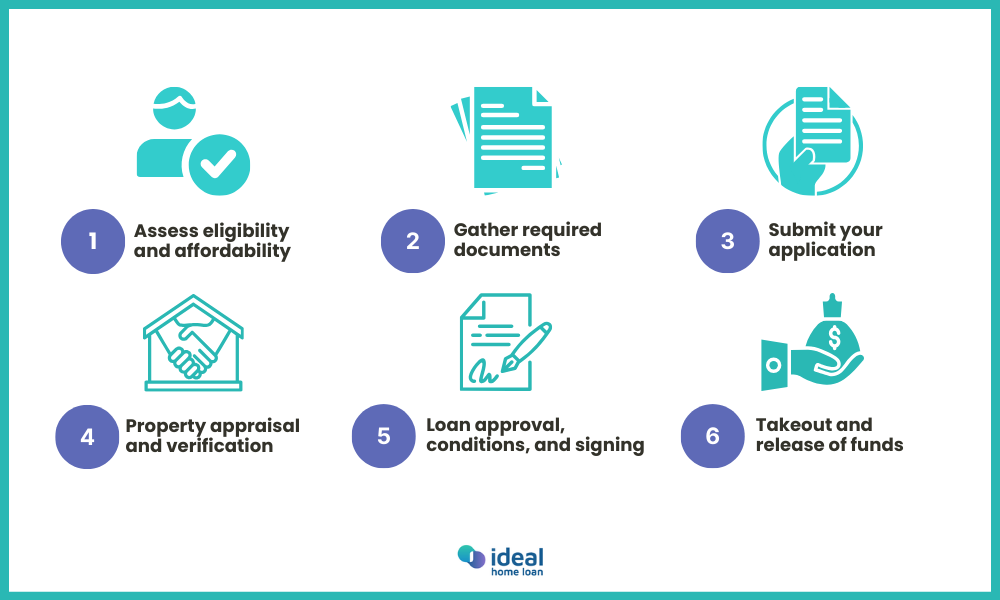
Think of this as your roadmap from “I want a home” to “here’s the key to your new house.”
Step 1: Assess Eligibility and Affordability
Before diving into applications, it is essential to check whether you qualify for a housing loan and what loan amount is reasonable for your income. This step ensures that your home financing dreams are practical and achievable.
For most banks and Pag‑IBIG Fund loans, eligibility is based on several key factors.
Eligibility Criteria
- Age - Usually 21 to 65 at the time of loan maturity
- Income - Your monthly loan payment should not exceed 30-40% of your income
- Employment or business stability - Banks prefer applicants with at least 2 years in the same employment or business
- Credit record - A clean credit history improves approval chances
Affordability Criteria
Affordability ensures that the loan you apply for fits comfortably within your budget. Banks recommend that your monthly housing loan payment should not exceed 30–40% of your gross monthly income. Staying within this range helps you manage other expenses, existing loans, and unexpected costs while avoiding financial stress.
💡 IDEAL Home Loan Tip: For a more convenient way to estimate your loan amount, you may use IDEAL Home Loan's Loan Calculator. |
Step 2: Gather Required Documents
Once you know you’re eligible, the next step in the housing loan process is gathering all the necessary documents. Missing documents are one of the top reasons for delays, so having everything organized ahead of time is crucial.
General Requirements (For Bank, Pag-IBIG, and In-House)
Personal Identification
- Valid IDs
• Passport
• Driver’s License
• SSS, GSIS, or PRC ID
• Tax Identification Number (TIN)
• Community Tax Certificate (Cedula)
- Proof of income
• For employed applicants: payslips, Certificate of Employment, ITR/Form 2316, bank statements
• For self-employed applicants: business registration, audited financial statements or ITR for 2 years, bank statements
- Property documents
• Reservation Agreement or Contract to Sell
• Transfer Certificate of Title (TCT) or Condominium Certificate of Title (CCT)
• Latest Real Property Tax (RPT) Receipt
• Latest Tax Declaration
Special Requirements by Loan Type
Bank Housing Loan
- Completed bank housing loan application form
- Additional bank-specific forms or disclosures
Pag‑IBIG Housing Loan
- Pag‑IBIG membership with at least 24 months of contributions
- Completed Pag‑IBIG housing loan application form
- Proof of property ownership or Contract to Sell
Developer / In-House Loan
- Completed application form from the developer
- Down payment receipt (if applicable)
- Reservation agreement
💡 IDEAL Home Loan Tip: Not sure which documents apply to your situation? Our full guide provides a detailed and updated list of requirements, along with a checklist and simple explanations to help you prepare everything with confidence. |
With your documents ready, it is time to submit your housing loan application. You can apply online or in-branch, depending on your lender.
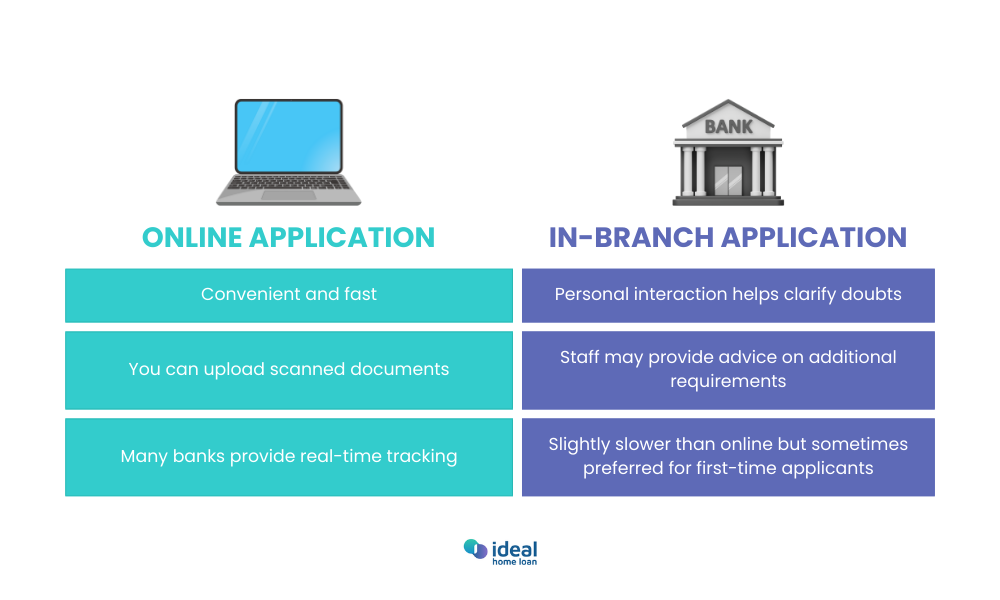
💡 IDEAL Home Loan Tip: |
Step 4: Appraisal and Property Verification
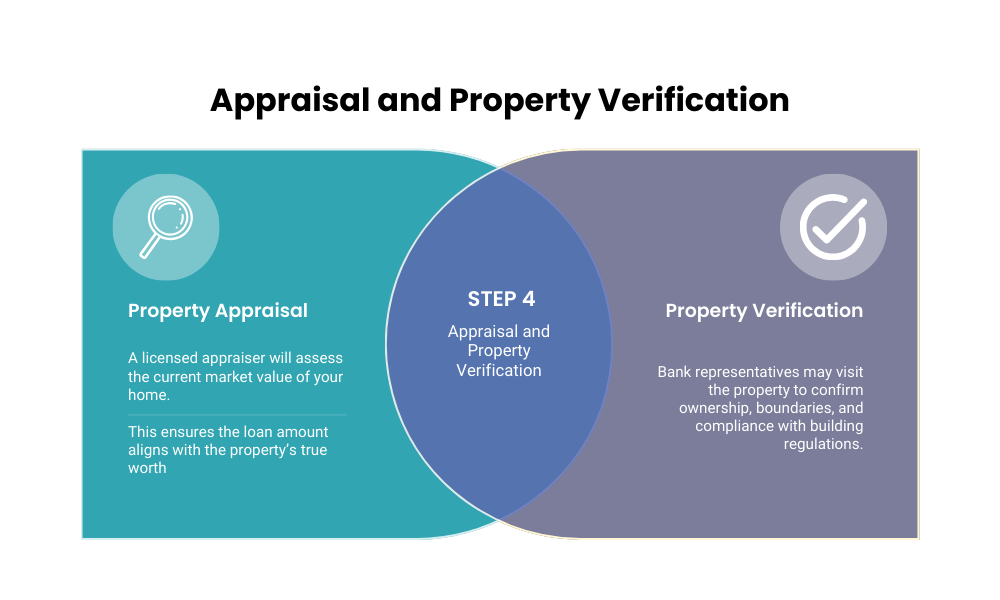
Once your application is submitted, the next step in the housing loan process is property appraisal and verification. This step ensures that the property you intend to buy is worth the loan amount and meets legal requirements.
The appraisal involves a licensed professional assessing the property’s current market value. In the Philippines, the licensed appraiser is usually appointed by the bank or Pag‑IBIG Fund, not by the buyer. Their role is to ensure that the property is worth the loan amount and meets legal requirements.
Verification often includes a site visit to check ownership, boundaries, and compliance with building and zoning regulations. Properties with incomplete documents or unclear boundaries can face delays at the stage so ensuring everything is in order beforehand is crucial.
💡 IDEAL Home Loan Tip: |
Step 5: Approval, Conditions, and Signing
After appraisal and verification, your lender will review your application to decide on approval. Some applicants may receive conditional approval meaning the bank requires additional documents or clarifications before finalizing the loan. Common conditions may include updated income tax documents, additional co-borrower documents, or even additional collateral.
Once all conditions are met the lender issues the official loan approval and loan documents for signing. At this stage, it is essential to review the terms carefully. Pay attention to the interest rates, repayment schedule, any penalties for late payment, and any required insurance policies. Understanding the fine print ensures you’re fully aware of your obligations before moving forward.
💡 IDEAL Home Loan Tip: |
Step 6: Takeout and Release of Funds
The final step in the housing loan process in the Philippines is the release of funds, often referred to as takeout. At this stage, the lender disburses the loan amount directly to the seller or developer. Your first monthly amortization schedule is then issued, officially marking your transition from applicant to homeowner.
💡 IDEAL Home Loan Tip: |
Typical Timeline for a Housing Loan Process
While the duration of each step varies depending on the lender and property, a typical housing loan process in the Philippines might take anywhere from four to seven weeks for a smooth application.
Here’s a mini-table showing expected durations for each step:
Step | Duration | Notes |
Eligibility & Affordability | 1–2 days | Use loan calculators |
Gather Documents | 1–2 weeks | Depending on how organized you are |
Submit Application | 1–3 days | Online is faster |
Appraisal & Verification | 1–2 weeks | May be longer for rural or new properties |
Approval & Signing | 1–2 weeks | Conditional approvals may add time |
Takeout & Fund Release | 1–3 days | Depends on bank or developer |
How IDEAL Home Loan Simplifies the Process
Applying for a housing loan often involves multiple forms, repeated document submissions, and long waiting periods. Many borrowers only find out if they are eligible after weeks of processing, which can lead to delays or rejections that could have been avoided earlier.
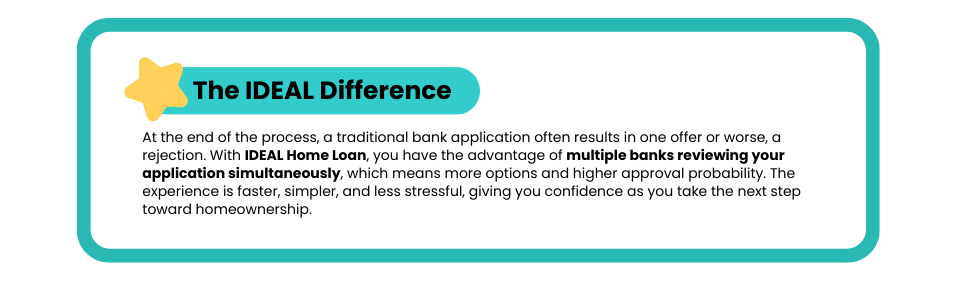
IDEAL Home Loan simplified this process by giving you early visibility into your eligibility and loan options. Instead of applying to just one bank at a time, you submit your details once and get assessed across multiple partner banks. This helps set realistic loan expectations from the start and improves your chances of approval.
With a more structured approach and fewer repeated steps, IDEAL Home Loan allows you to focus on choosing the right property while we help manage the housing loan process more efficiently.
Common Delays and How to Avoid Them
- Incomplete Documents
Missing or outdated documents are one of the top reasons loans get delayed.
How to Avoid: Use a checklist and double-check all IDs, income proofs, and property documents are complete and current before submission. - Unclear Property Titles or Encumbrances
Properties with missing titles, unpaid taxes, or liens can stall approvals.
How to Avoid: Confirm that the property has a clean title, updated tax declarations, and no legal disputes before applying. - Employment Verification Delays
Lenders often contact your employer to verify employment; slow responses can hold up processing.
How to Avoid: Inform your employer or HR department in advance and ensure they can provide verification promptly. - Bank Backlogs
Applications can be delayed when banks face higher volumes of loan requests. BSP data shows housing loan demand is usually stronger in the last quarter of the year and sometimes in the second quarter, which can slow down processing times.
How to Avoid: Apply early, avoid peak seasons, and track your application status regularly. - Conditional Approval Requirements
Banks may request extra documents or co-borrower information after initial assessment.
How to Avoid: Be proactive—submit extra documentation when first asked and ensure co-borrowers are ready.
Checklist for a Smooth Application
Before you submit your housing loan application, it helps to have a clear system to track what’s already done and what still needs attention. A simple checklist can save you days—or even weeks—of back-and-forth with banks.
Instead of guessing whether you’ve missed a requirement, use a structured housing loan checklist that covers all the essential housing loan requirements in one place. This makes it easier to prepare documents, avoid delays, and move through the housing loan process in the Philippines with confidence.
To keep this guide easy to read, we’ve broken the full list into a separate, detailed article where you’ll find:
- A complete list of housing loan documents for banks, Pag-IBIG, and in-house or developer loans
- A format designed for quick reference, easy printing, and hassle-free tracking so you always know what you’ve already submitted and what still needs your attention
👉 Download and read the complete Housing Loan Requirements Checklist here
Frequently Asked Questions
Q: How long does it usually take to get a housing loan approved?
A: The process can take anywhere from 30 to 90 days, depending on the bank, type of property, and completeness of your documents. Pag‑IBIG loans may take a similar or slightly shorter time for pre-checked applicants.
Q: What are the typical fees I need to pay when applying for a housing loan?
A: Common fees include:
- Processing fees
- Appraisal fees
- Mortgage Redemption Insurance (MRI)
- Taxes and documentary stamp taxes
Fees vary by lender, so check with each bank or developer before submitting.
Q: How long does it take to release the loan funds after approval?
A: Once all documents are signed and conditions met, fund release usually happens within 1–2 weeks for banks, and a bit faster for Pag‑IBIG loans if documents are complete.
Q: Are there additional fees if I re-apply after rejection?
A: Some banks may charge a new processing fee for each application. Using services like IDEAL Home Loan can reduce multiple submissions by pre-checking eligible banks first.
Q: How long does the appraisal take?
A:Property appraisal and verification can take 1–3 weeks, depending on the property type, location, and lender. Scheduling and preparing documents early helps avoid delays.
Q: What should I do if I’m unsure which housing loan option fits my situation?
A: Start with a simple eligibility and affordability check before submitting to any lender. Understanding your income, obligations, and target property early makes the entire housing loan process in the Philippines smoother and less stressful.
Q: Does the type of property I choose affect my chances of loan approval?
A: Yes. Banks assess not just the borrower but also the property. Properties in flood-prone areas, with access issues, or incomplete documentation may be harder to finance—even if you qualify as a borrower
Q:What happens if my loan amount is approved for less than what I applied for?
A: You can either increase your down payment, choose a lower-priced property, add a qualified co-borrower, or adjust your loan tenor. Partial approvals are common and don’t automatically mean rejection.
Q: Can I apply for a housing loan while still paying another loan?
A: Yes, as long as your total monthly loan payments stay within the lender’s debt-to-income limits. Existing car loans, personal loans, and credit cards will be factored into your affordability assessment.
Q: Can I switch lenders if my application is already in progress?
A: Yes, but it may mean starting over. Each bank has its own credit evaluation and appraisal process. This is why applying through a platform that allows multiple bank submissions at once can save time.