Check out more of our news
Common Property Title Issues That Cause Loan Rejection
February 27, 2026 | Read Time 4 minutes

When you apply for a home loan in the Philippines, lenders check more than your credit and income, they also scrutinize the property title you’re offering as collateral. A clean title gives banks confidence that they can lend you money. But certain title problems are common here and can lead to delays or outright loan rejection.
Common Title Problems
Here are the most frequent issues banks find during due diligence:
- Fake or fraudulent Titles
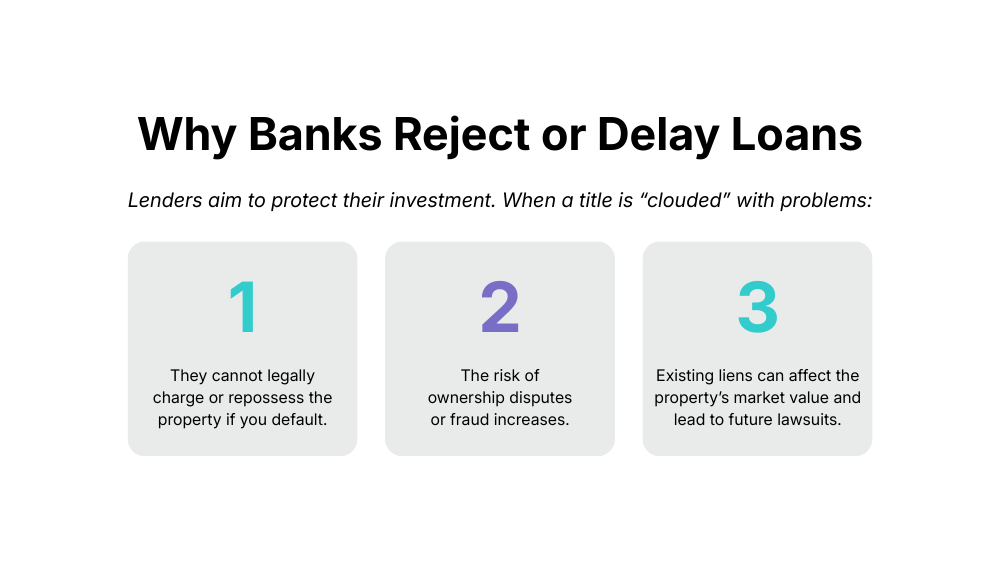
Some titles are forged, duplicated, or not officially recorded with the Registry of Deeds. These raise RED FLAGS for lenders because they may not reflect real ownership. - Liens, mortgages, and encumbrances
Existing loans or unpaid debts on the property, like unpaid real property taxes, outstanding home loans, or legal claims, will appear as annotations or liens on the title. Banks don’t like hidden financial obligations attached to collateral. - Errors and discrepancies in Title data
Misspelled names, wrong lot numbers, incorrect technical descriptions, or mismatched owner details can delay processing or trigger rejection until corrected. - Co‑ownership and inheritance complications
Properties inherited or co‑owned by multiple people must show all owners’ consent to use the title as collateral. Missing signatures or disputes can mean “No loan.” - Unverified or untransferred ownership
If a title is still under a developer’s name, or hasn’t been fully transferred to the seller, banks will hesitate. They require clear, registered proof of ownership before lending.
Resolving Common Title Issues
Even minor clerical mistakes can delay processing for weeks or months while corrections are made. Banks typically require all title issues to be resolved before releasing funds.
If you find title issues, here’s what you can generally do:
- Hire Legal Assistance – A lawyer or licensed broker can help uncover liens and prepare needed documents.
- Title Verification – Request a Certified True Copy (CTC) from the Registry of Deeds and check history and encumbrances.
- Correct Errors – File correction petitions (e.g., name or boundary fixes) with appropriate agencies or courts.
- Estate Settlements – For inherited or co‑owned properties, finalize estate documents or secure written consent from all owners
Investing effort into understanding your property title today saves months of stress tomorrow, protects your hard-earned money, and helps you move into your new home knowing you’ve built a foundation as solid as the house itself.